An exhibition built around doing
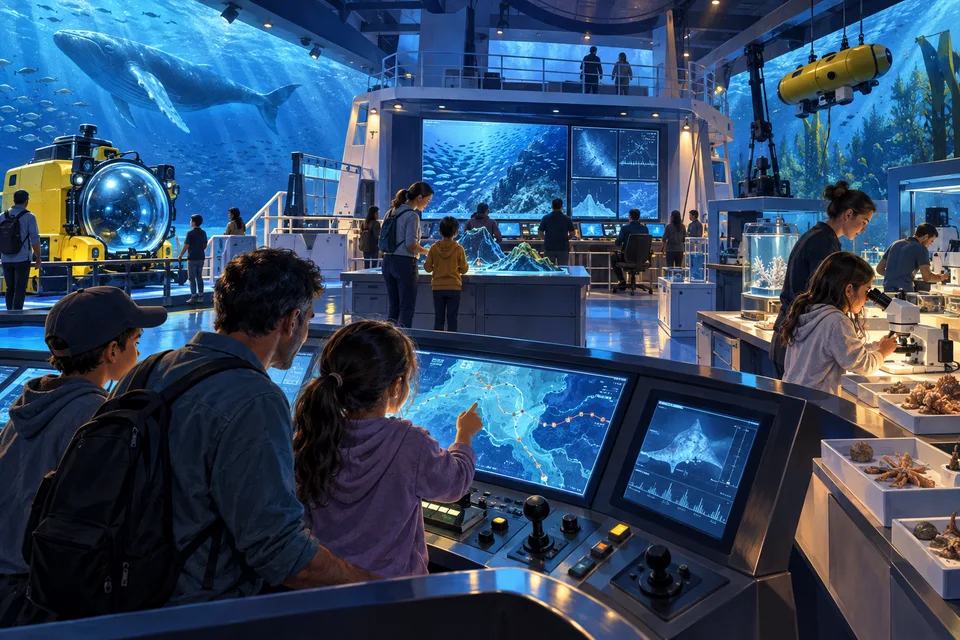
OceanXperience transforms part of WA Museum Boola Bardip into an interactive recreation of the OceanXplorer research ship. Instead of presenting ocean science only through objects and labels, it asks visitors to take on the role of an explorer: choose a mission, enter working environments and see how research teams study remote parts of the ocean. The exhibition is designed for families and curious visitors of different ages, making conversation and shared problem-solving central to the experience.
Move through the ship
The experience includes Mission Control, the Bridge, Wet Lab, Dry Lab and Sub Hangar. Together, these spaces introduce mapping, robotics, submersibles, sample handling and the analysis of environmental data. Large-scale media and real expedition footage connect the simulated work areas to ocean exploration. Do not rush to every control at once. Let children repeat an interaction or follow one question through several spaces; the exhibition is more useful when curiosity sets the pace.
What different ages can take from it
Younger visitors can engage through movement, screens and collaborative play, while older children and adults can pay closer attention to how scientists collect and interpret evidence. The optional HoloLab mixed-reality experience is offered on weekends and during school holidays, is recommended for people aged 13 and older, and has limited first-come places. It is not essential to the main exhibition. Families should decide in advance whether waiting for HoloLab is worth displacing time elsewhere.
Dates, tickets and timing
The WA Museum lists OceanXperience from Saturday 4 April to Sunday 11 October 2026 at WA Museum Boola Bardip in Perth Cultural Centre. Published exhibition-entry prices vary by ticket type, with free entry for children aged four and under and Companion Card holders, but prices and availability can change. Check the official page and ticketing system immediately before booking. Allow roughly 60 to 90 minutes for an engaged visit, longer if children want to repeat activities or join HoloLab.
Accessibility and sensory planning
The museum describes the exhibition as mostly accessible and links to more detailed accessibility information. Immersive media, screens, sound, lighting and hands-on stations can create a busy sensory environment, especially during school holidays. Visitors with specific access or sensory needs should review the current guide or contact the museum rather than relying on a general statement. A quieter arrival time, breaks outside the exhibition and a clear exit plan can make the visit easier.
Build a balanced museum day
OceanXperience is a special exhibition inside a much larger museum. Pairing it with every permanent gallery is likely to exhaust younger visitors. Choose one additional museum theme, stop for food or outdoor time in Perth Cultural Centre, and leave other galleries for another day. The museum’s visit-planning page covers public transport, nearby parking, café and amenities. Construction works in the cultural centre may also affect approaches, so check current notices before travelling.
The conservation idea
The exhibition links exploration with care for marine ecosystems: better tools and evidence help people understand what lies beneath the surface and why it matters. Keep that message grounded in the displays rather than turning the visit into a lecture. Ask what surprised each person, which research tool they would choose and what question they would investigate. The exhibition’s success lies in making complex science approachable without pretending the ocean has become simple.
Sources
Sources last validated: 14 September 2026.