A working story of Western Australian gold
The Perth Mint’s visitor experience combines its historic East Perth premises with an exhibition about Western Australian gold. The operator’s Gold Tour uses objects, interactive displays, a guided exhibition and a live demonstration to tell that story. This is a stronger visit when approached as industrial and social history, not only as a display of wealth. Give the guide time to connect the spectacular objects with the processes and people around them.
The live gold pour
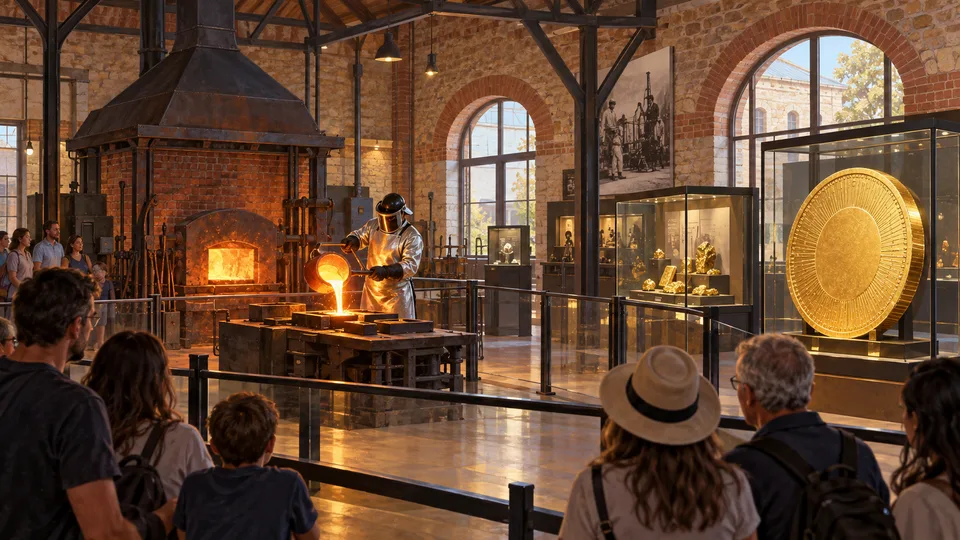
A live gold pour in the original Melting House is one of the defining parts of the visit. Molten gold is transformed into a solid bar in a controlled demonstration, making temperature, material and craft visible in a way a static display cannot. Demonstration access and tour times should be confirmed before booking. Follow safety instructions, keep children supervised and do not expect photography to be possible from every position. Arriving early reduces the chance of missing a timed component.
The One Tonne Gold Coin
The exhibition’s largest object is the One Tonne Gold Coin, presented by The Perth Mint as the world’s largest gold bullion coin. Published valuations change with the gold price, so the physical scale is more durable than a headline dollar amount. Look at its finish and relationship to the Australian Kangaroo bullion-coin series. The object is useful precisely because it makes an otherwise abstract quantity of precious metal tangible.
Nuggets, specimens and interpretation
The tour also includes Australia’s largest natural nugget collection and a historic coin exhibition. The contrast between natural specimens, refined bars and finished coins helps explain how gold moves from geology into industry, collecting and cultural symbolism. Treat any current valuations as time-sensitive and follow the guide’s interpretation. The most memorable object may be the largest, but the smaller specimens often reveal more about form, extraction and the decisions involved in turning a natural material into a standardised product.
Shops are optional
The Perth Mint Shop sells gifts, souvenirs, collector coins and bullion products, while a jewellery boutique presents Australian gemstones and jewellery. These retail areas are not a requirement for understanding the exhibition. Visitors considering precious-metal purchases should separate tourism from financial decision-making, review current terms and seek appropriate independent advice where needed. Families can agree on a souvenir budget before entering rather than allowing the shop to become the final measure of the experience.
Planning the visit
The Mint is at 310 Hay Street, East Perth. Check current opening hours, tour availability, ticket prices, accessibility, security rules and prohibited items on the operator’s website before travelling. A guided format means punctuality matters more here than at a free-entry gallery. Allow time for check-in and security processes, and avoid booking a tight onward connection. Public transport or a CBD walk may be simpler than searching for nearby parking at a fixed tour time.
Who will enjoy it
The experience suits visitors interested in Western Australian history, engineering, materials, coins or the theatre of a live industrial demonstration. Younger children may respond most strongly to scale and heat, while older visitors can follow the historical and technical explanation. Anyone expecting access to production areas should read the current tour description carefully. The public exhibition is curated, and its value comes from the story it can responsibly show rather than unrestricted access to a secure working institution.
Sources
Sources last validated: 14 September 2026.